
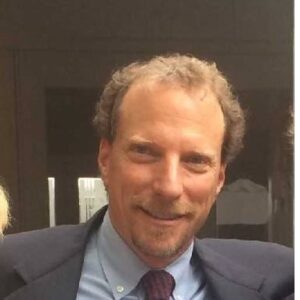
Weiner brings nearly 40 years of experience litigating landmark public interest environmental cases. His victories before the Alaska and Colorado Supreme Courts continue to safeguard Arctic waters from oil development and ensure government accountability for toxic groundwater contamination. Randy has also championed environmental justice closer to home, securing a $12.3 million soil remediation for 300 Denver families. Before launching his own environmental and personal injury firm in Boulder, he led litigation teams at New York Public Interest Research Group (NYPIRG), Trustees for Alaska, and the Land and Water Fund (now Western Resource Advocates). At ECPI, Randy brings this depth of experience in his efforts to reduce factory farm pollution in Colorado and build a model of accountability for similar efforts nationwide.
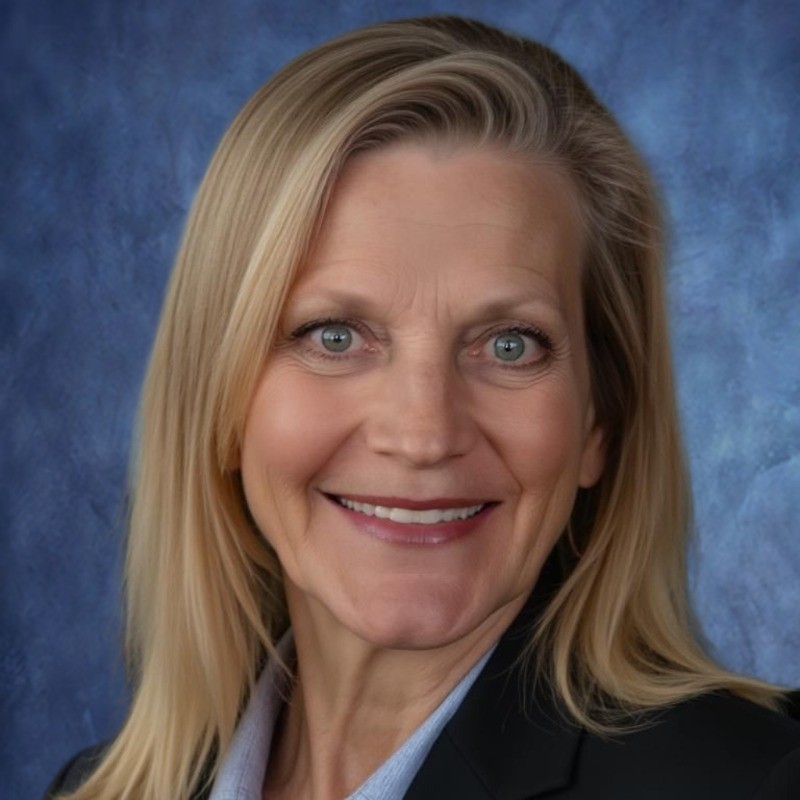
Kerner is an environmental attorney and former teacher who is dedicated to protecting communities, animals, and ecosystems from industrial harm. She has led complex toxic tort and consumer protection cases, litigated citizen suits under environmental laws, and built grassroots coalitions that empower people to defend their health and natural resources. Wendy led Save South Park, a grassroots campaign that raised $60,000 to fund litigation protecting residents from harmful mining expansion and is currently leading efforts to place an Environmental Rights Amendment into the Colorado Constitution. She is passionate about growing awareness of environmental issues and has presented to international, national, and state audiences. She is also a published author in the Stanford Environmental Law Journal. At ECPI, Wendy combines legal expertise, advocacy, and community engagement to hold polluters accountable while promoting humane, regenerative, and sustainable farming alternatives.
Dr. Marquis is an inter-disciplinary environmental scientist who worked as a scientific project manager for seven years at the University of Colorado, Cooperative Institute for Research in the Environmental Sciences, National Snow and Ice Data Center. She then was deputy director for the Intergovernmental Panel on Climate Change (IPCC) Working Group 1, Fourth Assessment Report, published in 2007. After that, Melinda took a position as a federal scientist at the National Oceanic and Atmospheric Administration (NOAA) in the Earth System Research Laboratory, where she developed and led the Atmospheric Science for Renewable Energy (ASRE) research program. She led efforts to improve the skill of the National Weather Service’s forecasts of wind speeds of turbine-height winds in the boundary layer and forecasts of surface solar irradiance, the main attenuator of which is clouds. Melinda then worked at the Department of Energy, National Renewable Energy Laboratory (NREL), where she led integration of offshore wind power, and then worked on grid integration studies with very high amounts of renewable energy and storage, as well as enhanced transmission capacity. Since 2021, Melinda has been working on wildlife issues, particularly those involving human factors. She is interested in working with social scientists to improve understanding of wildlife issues from the perspective of multiple groups of people.
Talbott is a veteran journalist and communications professional. He spent 24 years in newspaper journalism, serving as a reporter, columnist, editor, deputy editorial page editor and editorial page editor at the Colorado Daily and Daily Camera in Boulder. He was one of two finalists for the 1998 Pulitzer Prize for editorial writing. He left newspaper journalism in 2008 to lead the communications efforts for the CU Boulder College of Arts and Sciences, serving as communications director and assistant dean for communications, retiring in 2025. He has volunteered for various wildlife nonprofits. Previously, he volunteered as a Court Appointed Special Advocate for children who have suffered abuse and neglect with Voices for Children, a nonprofit. He also volunteered for The Visionaria Network, a nonprofit striving to empower girls and women in Peru.